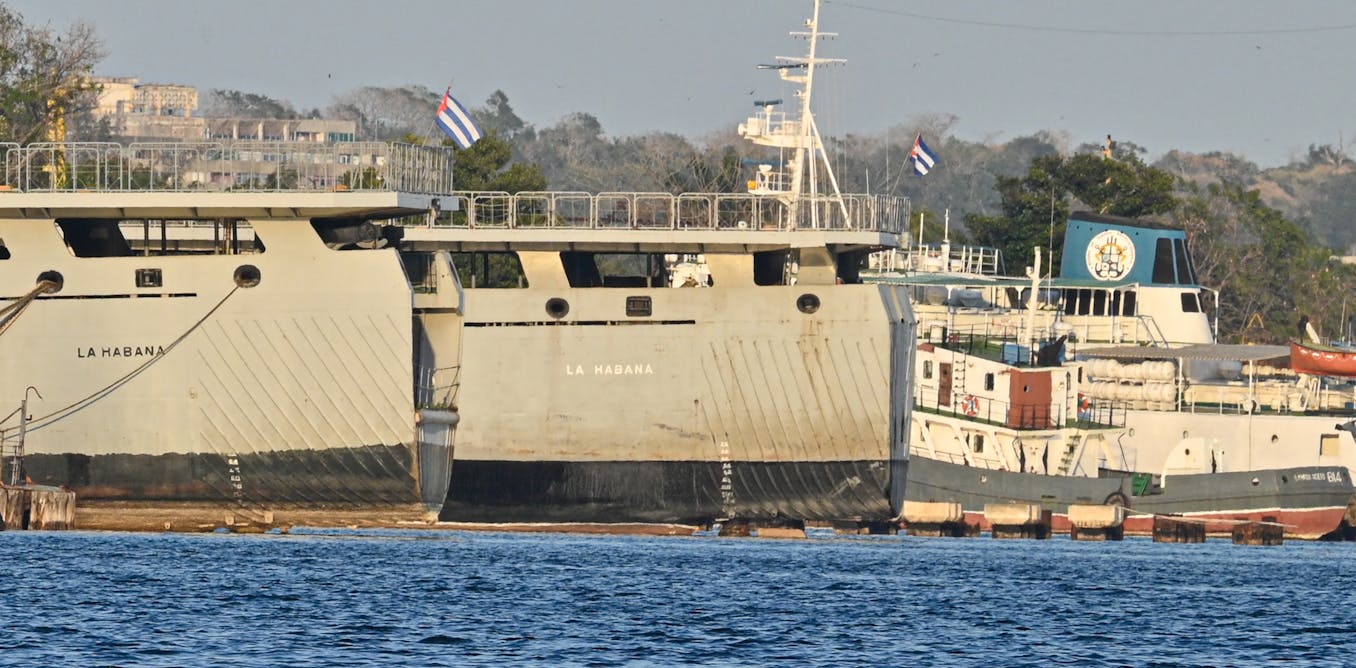
Cuba’s speedboat shootout recalls long history of exile groups engaged in covert ops aimed at regime change
A recent speedboat shootout in Cuban waters, resulting in casualties among heavily armed infiltrators, highlights a long history of Cuban exile groups engaging in covert ops. This incident comes amidst heightened US-Cuba tensions and increased sanctions, echoing past attempts to destabilize the Cuban government.
From the 1960s onward, dissident Cubans in exile have sought to undermine the government in Havana − often with US assistance.
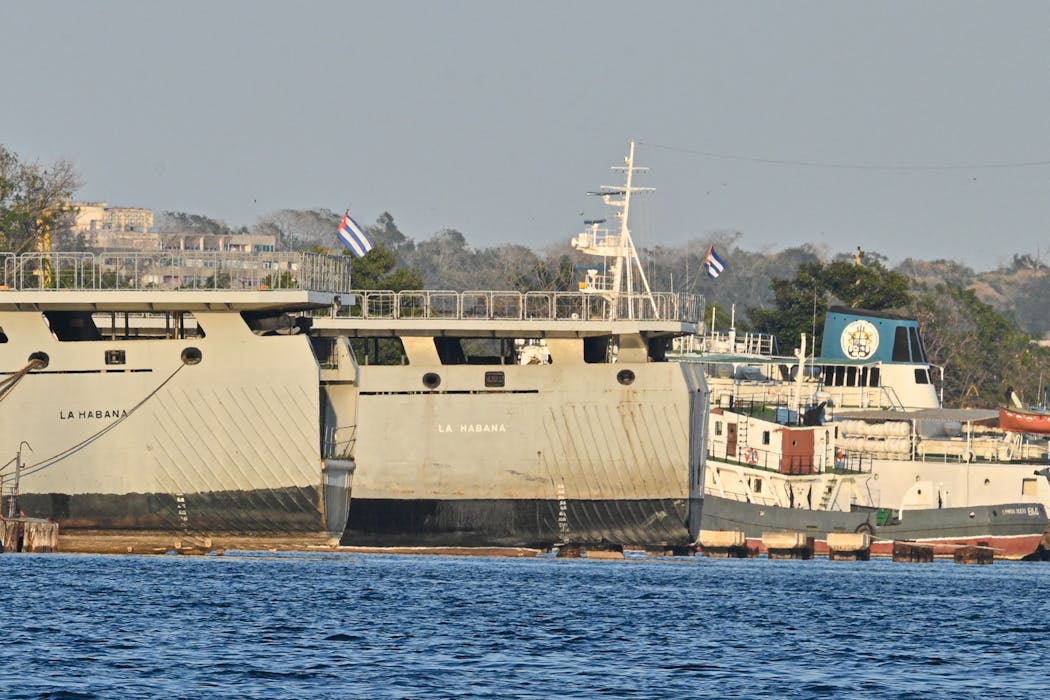
A boat carrying 10 heavily armed men entered Cuban territorial waters on Feb. 25, 2026, intent, according to officials in Havana, on infiltrating the island nation and undermining the communist government through acts of sabotage and terrorism. When the men opened fire on an approaching Cuban Border Guard patrol boat, the border guards returned fire, killing four and wounding the other six. Another Cuban American who had allegedly flown to Cuba from the United States to meet the infiltration team on the beach was later arrested.
While details about the incident continue to come out, the gun battle comes at a time of heightened tensions between Cuba and the United States, which for weeks has been pursuing a de facto total oil blockade of the island. The latest episode is also reminiscent of the early 1960s, when Cuban exiles, trained and armed by the CIA, tried to infiltrate Cuba to conduct acts of sabotage and assassinate the leaders of the Cuban Revolution.
As a longtime expert on U.S. foreign policy toward Latin America and co-author of a history of the bilateral diplomacy between the United States and Cuba, I know that Cuba’s exile community has long contained paramilitary elements. Encouraged by Washington’s intensified sanctions and heated rhetoric, and a weakened government in Havana, these elements seem to sense an opportunity now.
Cuba’s exiled paramilitaries
Following the triumph of the Cuban Revolution and Fidel Castro’s rise to power in 1959, U.S. policy toward the new government was antagonistic almost from the start.
In 1961, the CIA under President John F. Kennedy organized the Bay of Pigs invasion – a military operation by exiled Cubans aimed at overthrowing the young Castro government.

The attempted invasion was a “perfect failure,” in the words of author Theodore Draper, after which the agency recruited a number of the invaders to continue to wage irregular war against Cuba. They were part of Operation Mongoose, the Kennedy administration’s multifaceted program of diplomatic, economic, political and paramilitary pressure aimed at overthrowing the Cuban government.
The CIA’s financial support for exile paramilitary groups continued into the late 1960s, until it was phased out because of their ineffectiveness. Although the CIA gave up on overthrowing Castro by force of arms, the paramilitary exile groups did not.
Two of the most prominent groups – Alpha 66 and Omega 7 – continued their war against the Cuban government for years with tacit U.S. support. “We should not inhibit Cuban exile activity against their homeland,” President Richard Nixon wrote in 1971 in response to Coast Guard efforts to arrest members of Alpha 66. Five years later, two of the most prominent paramilitary leaders, Orlando Bosch and Luis Posada Carriles, orchestrated the bombing of a civilian airliner, Cubana Flight 455, killing all 73 people on board.
A change in attitudes
Frustrated by their inability to depose the Cuban government, the paramilitary groups turned their attention inward. In the late 1970s, these groups launched a campaign of terrorist bombings and assassinations mainly targeting Cuban Americans who dared speak out in favor of rapprochement with their homeland. In 1979, two members of the Committee of 75, Cuban Americans who traveled to Cuba to meet with Castro to secure the release of political prisoners, were assassinated by Omega 7.
President Ronald Reagan was certainly no friend of Castro’s Cuba, but his Justice Department launched a major crackdown on the U.S.-based paramilitary groups, winning convictions against a number of their members.
The terrorist attacks subsided, but the martial impulse has remained alive among some Cuban American extremists. Small groups have continued to hold weekend military training exercises in the Everglades in Florida, home to the world’s largest Cuban diaspora. Periodically over the years, some of these weekend warriors have tried to infiltrate Cuba. Almost always, they are quickly captured by Cuban police. The most recent firefight seems to be the latest of these incidents, albeit an unusually violent one.
Ratcheting up US hostility to Cuba
The number of these incursions, along with attempts by Cuban Americans to solicit acts of sabotage over social media, have increased in recent years as relations between Cuba and the U.S. have deteriorated, now at their lowest point in decades.
In his first administration, President Donald Trump reversed President Barack Obama’s 2014 Cuban thaw by imposing the toughest economic sanctions since the 1960s. President Joe Biden left most of those sanctions in place, even as the Cuban economy suffered during the COVID-19 pandemic.
Now in his second term, Trump has turned the screws even tighter by cutting off Cuba’s oil supply from Venezuela and threatening other countries if they send oil to Cuba. The result is a profound, unprecedented economic decline on the island that threatens to precipitate a humanitarian crisis.
Both Trump and Secretary of State Marco Rubio, who built his political career by being the most vocal anti-Cuban government member of Congress, have declared Cuba a failed state and predict its imminent collapse almost daily.
These predictions from the White House, along with the seemingly unsustainable economic cri...
Following this story?
Get notified when new coverage appears
Other Sources Covering This Story
2 sourcesMultiple outlets have reported on this story. Compare perspectives from different sources.


Did this story change how you see things?
Stories like this only matter when people see them. Help us get verified journalism in front of more eyes.
The Verity Ledger curates verified investigative journalism from trusted sources only.
See our sourcesMost Read This Week
Offshore Tax Haven Network: How Billionaires Hide Trillions from Public Coffers
Major Pharmaceutical Company Concealed Drug Side Effects for Over a Decade

Water Contamination Crisis: Industrial Waste Poisoning Rural Communities
Climate Data Manipulation: Energy Companies Funded Misleading Research for Decades

Foreign Influence Operations: Tracking Disinformation Networks Across Social Media