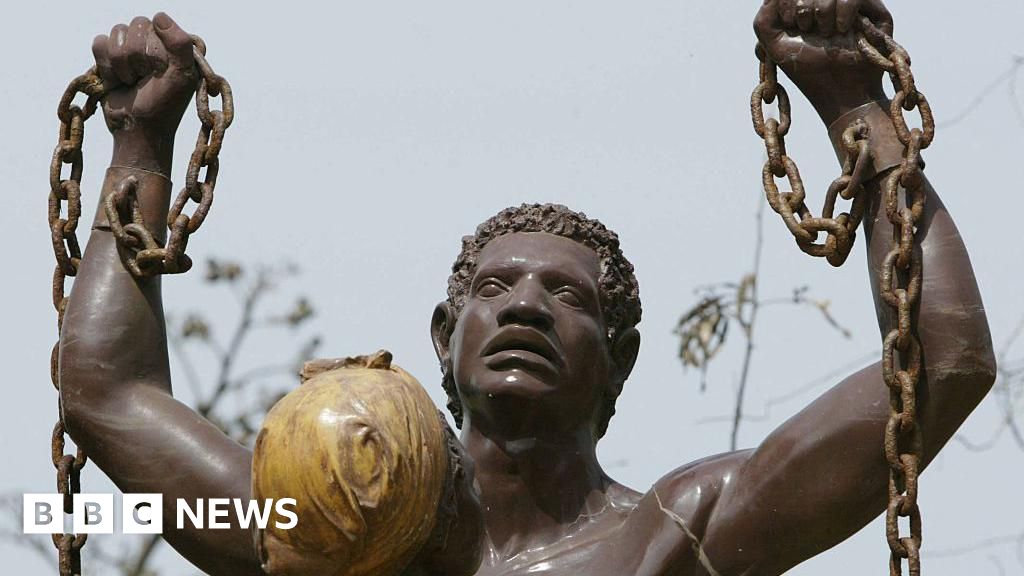
'The gravest crime against humanity': What does the UN vote on slavery mean?
Quick Insights
The Bottom Line
African and Caribbean nations seek UN-backed slavery reparations from Western nations that profited from the transatlantic slave trade.
AI Summary
African and Caribbean nations have pushed for a UN vote on slavery reparations, seeking compensation from countries that historically benefited from the transatlantic slave trade and colonial systems. The measure frames slavery as "the gravest crime against humanity," positioning it alongside genocide and other atrocities in international law. Determining which nations owe compensation and how much remains contentious, as wealthy Western nations that profited from slavery are unlikely to agree to binding financial obligations. The vote represents a significant diplomatic effort to formally acknowledge slavery's legacy within the UN framework, though enforcement mechanisms and actual payments face substantial political obstacles. The outcome will likely influence how the international community addresses historical injustices and reparations claims going forward.
What's Being Done
African and Caribbean nations have pushed for a UN vote to formally frame slavery as a crime against humanity and establish compensation mechanisms.
This article is part of a story we're tracking:
Should this be getting more attention?
You Might Have Missed
Related stories from different sources and perspectives
 Civil Rights
US votes against UN resolution labeling slavery ‘gravest crime against humanity’
The U.S., Israel and Argentina on Wednesday voted against a United Nations resolution led by Ghana to label the international slave trade as the “gravest crime against humanity” and call for reparations. The resolution received 123 votes from the U.N. General Assembly in favor and 52 countries abstained, including all 27 European Union members, the…
 Global
UN adopts Ghana's slavery resolution, defying resistance from US, Israel
A resolution proposed by Ghana at the United Nations on Wednesday to recognise transatlantic slavery as the "gravest crime against humanity" and calling for reparations has been adopted despite resistance from Europe and the US. At a UN General Assembly vote, 123 countries supported the resolution, which is not legally binding but carries political weight, while three opposed it, including the US and Israel, and 52 abstained, including the European Union and Britain. FRANCE 24's Jessica Le Masurier reports.
 Civil Rights
UN calls for reparations to remedy the 'historical wrongs' of trafficking enslaved Africans
The U.N. General Assembly adopted a resolution declaring the trafficking of enslaved Africans "the gravest crime against humanity" and calling for reparations.
 Global
Denmark votes in an early election that follows a crisis over US designs on Greenland
Danish voters are going to the polls in a general election
 Global
UN adopts Ghana's slavery resolution, defying resistance from US, Europe - Reuters
<a href="https://news.google.com/rss/articles/CBMiygFBVV95cUxNWlFsRlNDTUd3aHZoTWtnQ21wQVM0c3ctY21xWlUwMWxEM2lZVXdCUm55Q0QwbDRqUU5Nd2RuZS10UlUzOXZWazcyZWNmZ2dBRmw3SGdEOVlRNmxNQ1RDRXZ5VXVYU0NnZlc0ajBTZFJpWnp0OExXbnVQLUVYZnk2dGQ4RDJxbWEyUlR3emZsV1dieWdfTF9LR0xFYWtWOUVfQjk4aGg4XzBxQ3RsLWo0UzJ5YTRCand3VmYwWDVpaXQ2NWZPeldnOTJ3?oc=5" target="_blank">UN adopts Ghana's slavery resolution, defying resistance from US, Europe</a> <font color="#6f6f6f">Reuters</font>
 Politics
Amendment to require photo ID to vote fails in Senate as Democrats object
An amendment that would require voters to show photo identification to cast a ballot failed to advance in the Senate on Thursday.

US embassy in Mexico prompts outrage with AI video promoting ‘self-deportation’
<p>AI-generated footage depicts group of men performing a corrido, singing phrases including ‘return to your roots’</p><p>An AI-generated video from the US embassy in Mexico encouraging migrants to “self-deport” has sparked disbelief and outrage online.</p><p>The video posted this week on official embassy social media accounts depicts a group of men wearing black caps and sporting tattoos performing a kind of traditional Mexican ballad known as a <a href="https://www.theguardian.com/music/2004/sep/19/urban1">corrido</a>.</p> <a href="https://www.theguardian.com/us-news/2026/mar/28/us-embassy-mexico-outrage-ai-video-self-deportation">Continue reading...</a>
Did this story change how you see things?
Stories like this only matter when people see them. Help us get verified journalism in front of more eyes.
The Verity Ledger curates verified investigative journalism from trusted sources only.
See our sourcesMost Read This Week
Fentanyl found inside Barbies sold at Missouri discount store, police say

Senate deal reached to cap insulin costs

Washington ignores America's fiscal cliff

Iran built a vast camera network to control dissent. Israel used it to track targets, AP sources say