

Operation Epic Fury runs on critical minerals and we’re getting them from our adversaries
Quick Insights
The Bottom Line
Senate resolution introduced to overturn mining ban, aiming to secure critical minerals for national defense.
How This Affects You
This reliance on foreign adversaries for critical minerals impacts national security and economic stability.
AI Summary
A resolution has been introduced in the U.S. Senate to overturn a mining ban imposed under the previous administration. The action is necessary to secure critical minerals needed for Operation Epic Fury and maintaining American air dominance. The current reliance on foreign adversaries for these minerals poses a strategic vulnerability to national defense operations.
What's Being Done
A resolution has been introduced in the U.S. Senate.
Source Coverage Map
2 of 43 tracked sources covered this story
Following this story?
Get notified when new coverage appears
Other Sources Covering This Story
1 sourceMultiple outlets have reported on this story. Compare perspectives from different sources.

This article is part of a story we're tracking:
Should this be getting more attention?
You Might Have Missed
Related stories from different sources and perspectives
 AI & Warfare
Centcom commander touts use of AI in fight against Iran during Operation Epic Fury
Advanced AI tools "can turn processes that used to take hours and sometimes even days into seconds,” Adm. Cooper said. The post Centcom commander touts use of AI in fight against Iran during Operation Epic Fury appeared first on DefenseScoop .
 Environment
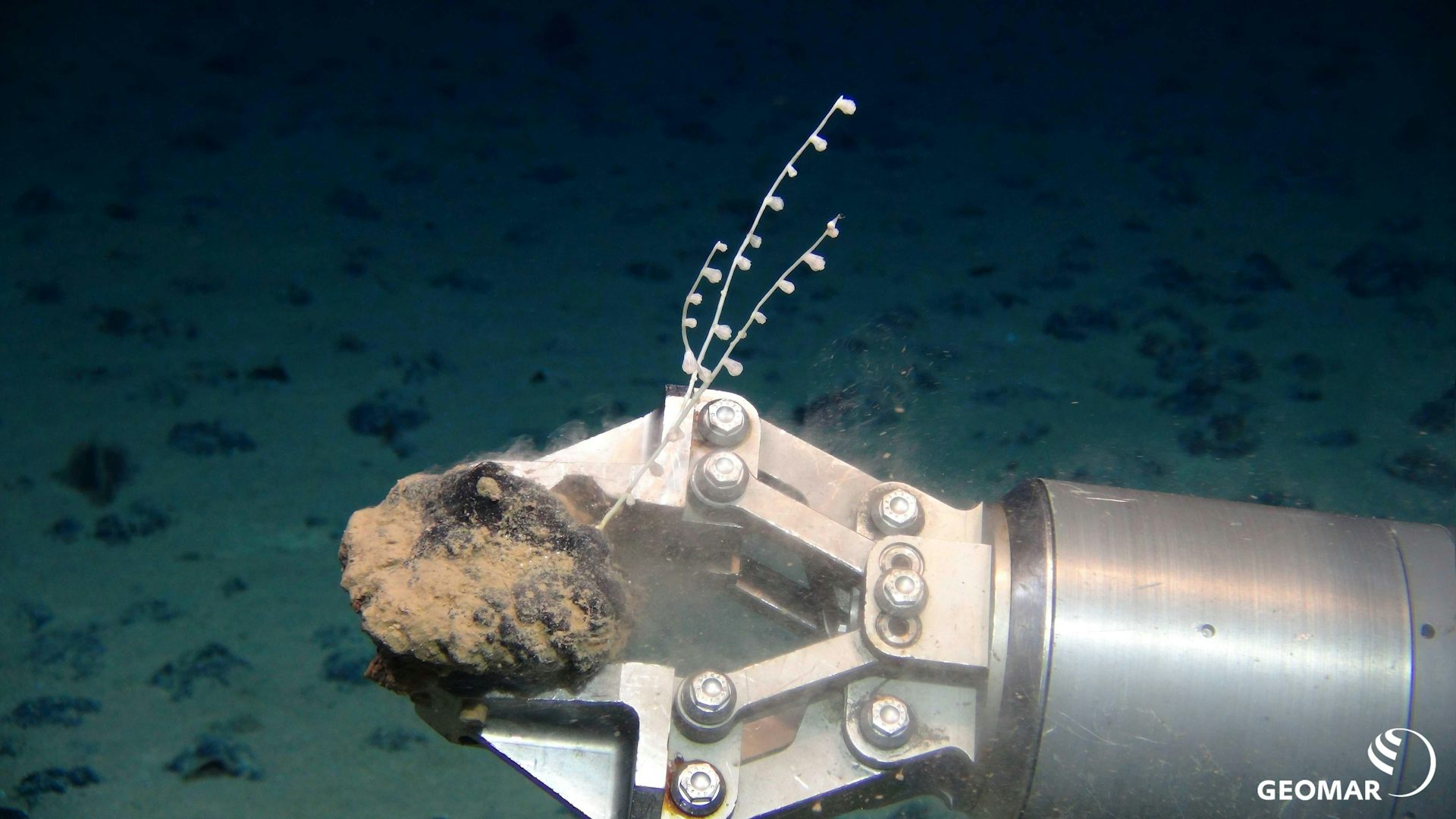
Mining the ocean floor: 5 deep-sea sources of critical minerals essential to technology, and the fragile marine life at risk
Critical minerals are found in several forms in the ocean, from potato-size nodules to brine pools. They are also in some of the least understood parts of our planet.
 National Security
The Bank Trump Is Relying On for Rare-Earth Minerals
The Export-Import Bank is providing a $10 billion loan to Project Vault, an initiative to stockpile critical minerals. The project is the administration’s latest effort to reduce reliance on China.
 National Security
Satellite firm extends Middle East image delay to prevent use by US adversaries - Reuters
<a href="https://news.google.com/rss/articles/CBMi1gFBVV95cUxNU3ZlTTEyd2w0cUFKSU81NjdzdTg1cGxZb0UtU0NvbWJBNGVHSkxjME9pdWRLdV84QXNMWmc2UGZKcFlHbHNhYVBYVGxsbk1HVEp0YUtjWGduX081WElnc1dpeFo3VVNNRWhVVkJQV3RlMDNwZmhUQldOZWtjSmxLQzFDUVJvQzhFTUR2ZHl2d0M3bk5JWFhobzdGRGxGMzNSUVVJaWN2UUhLazFodU5KaW9YMTZsbmp1UnJRRWprVXVEY29Pb1JTaWl6alFhMGRQNVhfM0l3?oc=5" target="_blank">Satellite firm extends Middle East image delay to prevent use by US adversaries</a> <font color="#6f6f6f">Reuters</font>
 National Security
Israel strikes central Beirut after threatening to expand Lebanon operations
Israel renewed its strikes on Beirut on Thursday, as it threatened to expand operations and seize territory in Lebanon if Hezbollah did not stop its attacks. The Israeli military issued a call to evacuate ahead of the Beirut attack, after having also widened its evacuation warning for residents in southern Lebanon.
 Environment
Ruptured pipe that leaked millions of gallons of raw waste into the Potomac is back in operation - AP News
<a href="https://news.google.com/rss/articles/CBMiqgFBVV95cUxOblpkN2p0OFRjTElSOFFhUC0zYmFsaDgwSFlQMkxENk5sSE5BLUE0UHU2TTRkaDd1cDlNeEw2aFhZanQ0a3MyME0zQzZoWWRQRS1mdDZIUjFnc2xqeWd2bUNqNnZuSXhSZHhnYkFXdFc4U1RqRU92T0w2MDFXcmx3Z1lBdl9BMDlTTDFVTllEVHZCZXBrNktTMEgwMzUzYWczVzA2YXZIX0wwQQ?oc=5" target="_blank">Ruptured pipe that leaked millions of gallons of raw waste into the Potomac is back in operation</a> <font color="#6f6f6f">AP News</font>

Hacked data shines light on homeland security’s AI surveillance ambitions
<p>Records show DHS tech incubator spending large sums on partnerships that would expand surveillance capabilities</p><p>Hacked data from the Department of Homeland Security’s technology incubator shows it funding a variety of companies that would expand its surveillance capabilities with artificial intelligence, the Guardian can reveal.</p><p>The projects at the Office of Industry Partnership (OIP) include automated surveillance in airports; adapters allowing agents to use phones for biometric scanning; and an AI platform that ingests all 911 call data nationally and builds “geospatial heat maps” to “predict incident trends”, which appears to be a form of predictive policing.</p> <a href="https://www.theguardian.com/us-news/2026/mar/15/hacked-data-homeland-security">Continue reading...</a>
Did this story change how you see things?
Stories like this only matter when people see them. Help us get verified journalism in front of more eyes.
The Verity Ledger curates verified investigative journalism from trusted sources only.
See our sourcesMost Read This Week
Lasers may be the next frontier for stopping Iran's cheap drones

Race on to establish globally recognised 'AI-free' logo

Biggest wildfire in Nebraska history continues to burn out of control - abcnews.com

Defense official reveals how AI chatbots could be used for targeting decisions

Rubio designates Afghanistan as ‘state sponsor of wrongful detention’
